
papaircraft.ch
Online gallery for my paper airplane art

Starting point
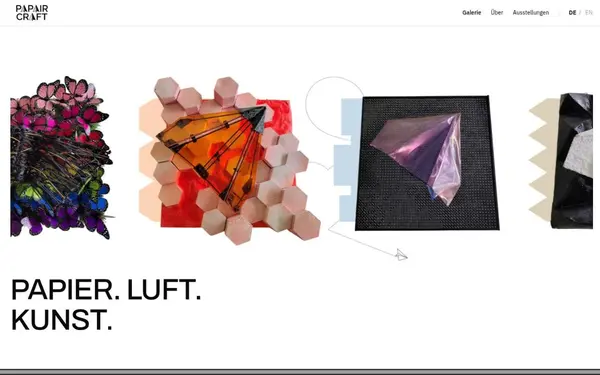
Paper airplanes have been with me since childhood, from my Matura thesis on the physics of paper flight to four Red Bull Paper Wings competitions. That turned into a series of wall pieces: always the same silhouette, each time in different materials, from leather and gears to felt and sunflower seeds, butterflies and driftwood. These pieces needed a place where people can look at them, borrow them or buy them.
The website
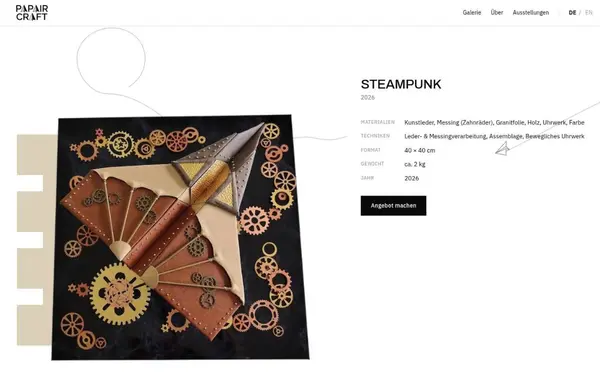
A gallery, not a shop. The design is deliberately restrained: a white background like the wall the pieces hang on, neutral type, few elements per screen. Only the pieces are loud. Each piece has its own page with materials, techniques, size and weight, and a discreet "Make an offer" instead of a buy button. An "Exhibitions" page speaks to restaurants, galleries and public spaces that want to show a piece.
Technically it is a static Nuxt site on GitHub Pages: every piece one Markdown file, images optimised through Nuxt Image, German and English. The contact form uses the same small backend as my personal website.
AI in the workflow
I built the site with Claude Code, and here too most of the work went into the guardrails:
- Rules instead of rework: vision, audience, tone and design principles live
in
CLAUDE.mdand a separate design document. New pages and copy are written against those rules, not against my memory. - Hooks as a style check: one hook blocks any write that would put a spaced dash into the content, because it quickly makes copy sound AI-written. A second one formats every Markdown file automatically after it is edited. The rules apply before I even have to look.
- Discoverability in phases: keyword research turned into a phased plan
that was worked through step by step: a sitemap with language variants,
llms.txtfor AI assistants, per-page metadata, structured data describing each piece as an artwork with material and size, and alt texts that name the material.
Timeline
The site went live on 3 June 2026. In mid-June the "Exhibitions" page with its contact form and the discoverability work followed. Since then the gallery grows with every new piece, each added as a single Markdown file.
What I learned
On an art website the hardest decision is what to leave out. And a hook that enforces a rule is more reliable than the same rule in a prompt.